Note: A minimum order of $175 is required at checkout
AI in Analytical Chemistry: Where It Works and Where It Fails – Comprehensive Guide

Artificial intelligence (AI) and machine learning have transformed countless scientific disciplines, but few areas have felt the impact as profoundly as analytical chemistry. In 2026, AI in analytical chemistry is no longer a futuristic promise — it is an everyday tool in labs worldwide, accelerating data processing, improving accuracy, and uncovering insights hidden in complex datasets. From spectroscopy and chromatography to mass spectrometry and drug discovery, artificial intelligence analytical chemistry is reshaping workflows, reducing human error, and enabling high-throughput analysis that was once impossible
Yet, for all its power, AI in analytical chemistry is not infallible. Overhyped claims, black-box models, and poor data quality have led to real-world failures, raising questions about reliability, interpretability, and ethical use. This in-depth guide examines where machine learning analytical chemistry excels, where it falls short, and how researchers can maximize benefits while avoiding pitfalls in 2026.
The Rise of AI in Analytical Chemistry: Key Drivers in 2026
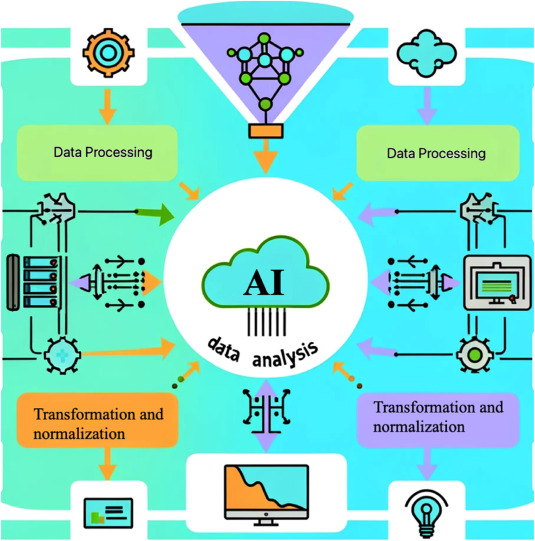
The integration of AI in analytical chemistry accelerated dramatically after 2020, fueled by:
- Explosion of high-resolution data from LC-MS/MS, NMR, and hyperspectral imaging
- Need for rapid analysis in pharmaceutical QC, environmental monitoring, and forensic toxicology
- Advances in deep learning architectures (CNNs, transformers, graph neural networks) tailored to chemical data
- Open-source tools (ChemAI, DeepChem, RDKit + PyTorch) lowering barriers to entry
By 2026, the global market for AI-driven analytical instruments exceeds $5 billion, with CAGRs above 20%. Labs now routinely use AI analytical chemistry for peak deconvolution, spectral interpretation, and predictive modeling — tasks that once required weeks of expert time.
Where AI Excels: Proven Success Areas in Analytical Chemistry
AI in analytical chemistry delivers transformative results in several core domains.
- Spectroscopy & Spectral Interpretation Convolutional neural networks (CNNs) and transformers excel at interpreting complex spectra (IR, Raman, NMR, UV-Vis). Models trained on millions of spectra achieve >95% accuracy in compound identification — far surpassing traditional library matching. Machine learning analytical chemistry tools like SpectraAI and ChemSpectra automate peak assignment, reducing analysis time from hours to seconds. In forensic labs, AI identifies unknown NPS in seconds from IR/Raman data.
- Chromatography & Peak Deconvolution Deep learning deconvolutes overlapping peaks in LC-MS and GC-MS chromatograms with near-human accuracy. Tools like PeakBot and DeepChrom use U-Net architectures to separate co-eluting compounds, improving quantification in complex matrices (blood, urine, environmental samples). AI in chromatography has become standard for high-throughput metabolomics and proteomics, where manual integration is impossible.
- Mass Spectrometry & Structural Elucidation Graph neural networks (GNNs) and generative models predict molecular structures from MS/MS spectra with >80% top-1 accuracy. Platforms like CSI:FingerID and MSNovelist rival expert manual annotation. AI in mass spectrometry accelerates NPS identification, where traditional databases fail due to novel analogs.
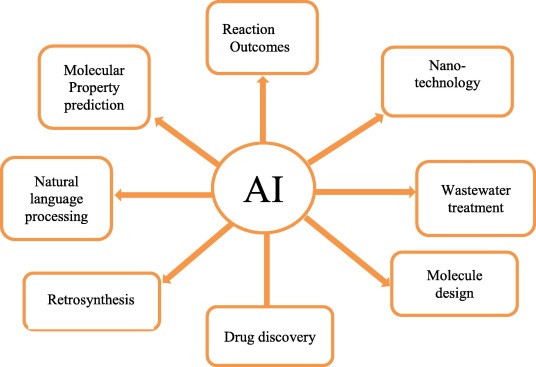
- Drug Discovery & ADMET Prediction AI models predict absorption, distribution, metabolism, excretion, and toxicity (ADMET) properties from SMILES strings or molecular graphs. DeepChem, Chemprop, and MolCLR enable virtual screening of millions of compounds. AI in drug discovery has shortened hit-to-lead timelines from years to months, with companies like Insilico Medicine and Exscientia reporting clinical candidates discovered entirely by AI.
- Forensic Toxicology & NPS Detection Machine learning classifies unknown peaks in HRMS data, flagging potential NPS. AI-assisted libraries (NPS Discovery, HighResNPS) achieve >90% identification rates for novel cathinones and opioids.
These successes demonstrate that AI in analytical chemistry thrives when applied to pattern recognition, data reduction, and prediction tasks with large, high-quality datasets.
Where AI in Analytical Chemistry Fails: Limitations & Pitfalls
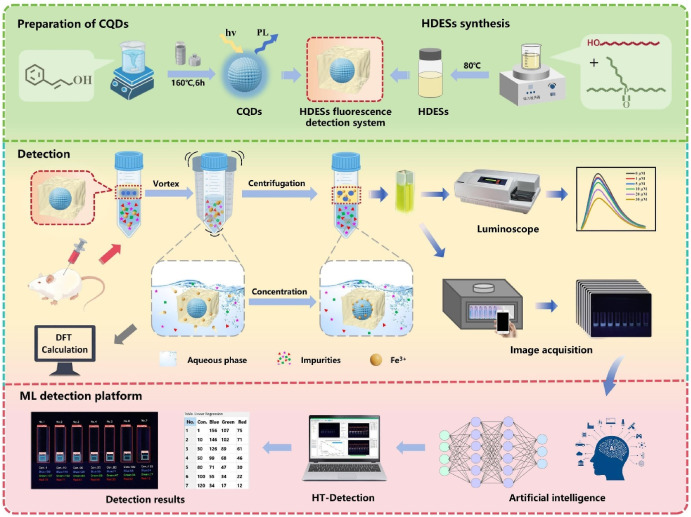
Despite the hype, AI in analytical chemistry has clear boundaries and failure modes that researchers must understand.
- Data Quality & BiasMachine learning analytical chemistry models are only as good as their training data. Biased datasets (e.g., over-representation of common pharmaceuticals) lead to poor generalization for novel NPS. Small, noisy datasets cause overfitting — a common issue in academic labs with limited samples.
- Interpretability & Black-Box Models Deep learning models often function as black boxes, making it difficult to explain predictions to regulators or courts. In forensic cases, lack of interpretability can render AI evidence inadmissible. Explainable AI (XAI) techniques like SHAP and LIME help, but they are not yet standard in analytical chemistry AI.
- Over-Reliance on AI for Critical Decisions Automated peak picking and compound identification can miss low-abundance metabolites or artifacts. Human experts remain essential for validation, especially in high-stakes toxicology or regulatory submissions.
- Limited Generalization to Real-World Samples Models trained on clean standards struggle with matrix effects, co-eluting compounds, and instrument variability. AI in analytical chemistry performs best in controlled settings but often requires re-training or transfer learning for field samples.
- Ethical & Regulatory Challenges AI-generated structures may inadvertently suggest illegal analogs. Regulatory bodies (FDA, EMA) require human oversight for AI-assisted drug development. AI in chemistry must comply with Good Machine Learning Practice guidelines.
- Computational & Resource Demands Training large models requires GPU clusters and massive datasets — barriers for smaller labs. Open-source tools help, but access remains uneven.
Best Practices for Successful AI Implementation in Analytical Chemistry
To maximize AI in analytical chemistry while avoiding pitfalls:
- Use high-quality, diverse, annotated datasets
- Combine AI with expert review for critical decisions
- Employ explainable AI methods (SHAP, LIME, attention maps)
- Validate models on external, real-world samples
- Follow FAIR principles (Findable, Accessible, Interoperable, Reusable) for data sharing
- Document AI workflows for reproducibility and regulatory compliance
Case Studies: AI Successes & Failures in Analytical Chemistry
Success: DeepSpectra (2024–2026) achieved 97% accuracy in identifying 10,000+ NPS from IR spectra, reducing analysis time from hours to minutes. Failure: Early 2023 models trained only on pharmaceutical libraries misclassified novel fluorinated cathinones, leading to undetected overdoses in several cases.
These examples illustrate that AI in analytical chemistry succeeds when trained on diverse, representative data and used as a decision-support tool, not a replacement for human expertise.
Future Outlook for AI in Analytical Chemistry (2026–2030)
- Multimodal AI — Integrating spectra, chromatograms, and biological data for holistic analysis
- Federated Learning — Collaborative model training without sharing raw data
- AI-Driven Autonomous Labs — Robotic systems with embedded AI for high-throughput experimentation
- Regulatory Frameworks — FDA/EMA guidelines for AI validation in analytical methods
- Hybrid Human-AI Workflows — AI handles routine tasks; experts focus on interpretation
The future of artificial intelligence analytical chemistry is collaborative, not replacement.
Conclusion: Harnessing AI in Analytical Chemistry Responsibly
AI in analytical chemistry has revolutionized data handling, compound identification, and predictive modeling, but it is not a magic bullet. Success depends on high-quality data, interpretability, human oversight, and rigorous validation. In 2026, researchers who combine machine learning analytical chemistry with domain expertise will lead the field, while those who over-rely on black-box models risk failure.
As NMDA receptor antagonists and other emerging NPS classes continue to challenge detection, AI in analytical chemistry offers powerful solutions — when used wisely