Don't miss our holiday offer - up to 50% OFF!
How Laboratories Detect and Identify New Psychoactive Substances (NPS): Modern Techniques & 2025 Insights

The rapid growth of New Psychoactive Substances (NPS) has transformed modern forensic chemistry, toxicology, and academic research. Every year, dozens of previously unknown compounds emerge, spanning classes like tryptamines, arylcyclohexylamines, benzodiazepine analogs, stimulants, and synthetic cannabinoids. Because many new analogues appear structurally similar to existing compounds, how laboratories detect NPS rely on advanced analytical methods to accurately detect, identify, and characterize them.
Understanding how laboratories detect NPS is crucial for developing effective regulatory measures in public health and safety.We will also examine the historical context of how laboratories detect NPS and its implications for law enforcement. In this comprehensive guide, we explore the cutting-edge technologies laboratories use to analyze NPS in 2025, the challenges researchers face, and how the scientific community stays ahead of this continuously evolving landscape.
Why Detecting NPS Has Become More Complex
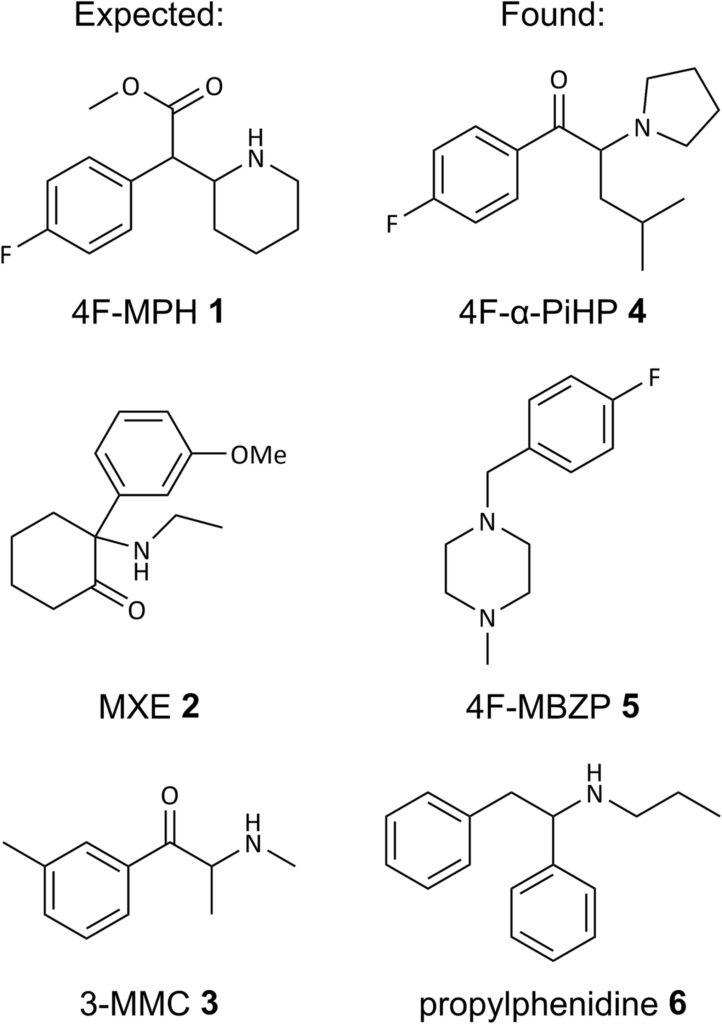
The chemical space of NPS has expanded dramatically. Minor structural modifications—such as fluorination, substitution on an aromatic ring, or slight side-chain alterations—can produce an entirely new compound that does not appear in existing reference libraries.
Labs face several unique challenges:
- Constant emergence of unclassified analogues
- Limited availability of reference standards for new compounds
- Closely related isomers requiring high-resolution separation
- Trace-level quantities in biological samples
- High diversity across chemical classes (tryptamines, phenethylamines, dissociatives, benzodiazepines, cannabinoids, etc.)
This constant evolution drives the need for sophisticated analytical systems capable of detecting both known and unknown substances with precision.
Core Analytical Techniques Used to Detect NPS in 2025
Below is an overview of the primary laboratory technologies used for NPS analysis, along with the strengths and limitations of each.
1. Gas Chromatography–Mass Spectrometry (GC-MS)
Furthermore, understanding how laboratories detect NPS can minimize the risk associated with emerging substances. How laboratories detect NPS is evolving thanks to advancements in technology and research methodologies. GC-MS remains one of the most widely used screening tools for identifying volatile or semi-volatile NPS. It is especially effective for:
Through these techniques, how laboratories detect NPS has improved dramatically over recent years.
- Dissociatives such as 2-FDCK, 3-MeO-PCP, MXPr
- Stimulants such as 2-FA, 4-FMA, 3-FPM
- Many phenethylamines and substituted cathinones
Why labs rely on GC-MS:
- Strong fragmentation patterns
- Large existing spectral libraries
- Excellent for rapid screening
- Good separation of isomers in many cases
Limitations:
Some compounds degrade under heat or do not volatilize efficiently, prompting the need for LC-based methods.
2. Liquid Chromatography–Tandem Mass Spectrometry (LC-MS/MS)
LC-MS/MS is the current gold standard for detecting low-volatility NPS and compounds found in biological matrices such as blood, urine, and tissue.
Perfect for analyzing:
- Tryptamines (e.g., 4-Ho-MET, 4-AcO-DMT, 5-MeO-DMT)
- Novel benzodiazepines
- Non-volatile synthetic cannabinoids
- Most modern stimulants and dissociatives
Advantages:
- No need for derivatization
- Highly sensitive (detects trace amounts)
- Capable of quantification
- Suitable for unstable compounds
In 2025, improvements in triple-quadrupole systems allow multi-target screening of hundreds of NPS in a single run.
3. High-Resolution Mass Spectrometry (HRMS)
HRMS systems such as Orbitrap and TOF-MS provide extremely precise mass measurements, allowing researchers to determine:
- Exact mass
- Empirical formula
- Fragmentation pathways
- Structural clues for unknown analogues
HRMS is critical for identifying brand-new NPS that do not appear in any library. Researchers often use HRMS in combination with:
- Retention time prediction models
- Computational fragmentation analysis
- Database matching via open-source tools
This technique has become essential as new analogues appear with modifications too subtle for conventional mass spec systems.
4. Fourier Transform Infrared Spectroscopy (FTIR)
FTIR is often used by field analysts, customs laboratories, and harm-reduction services for rapid on-site identification.
Key uses:
- Identifying powdered NPS
- Distinguishing between certain isomers
- Comparing samples against IR libraries
Portable FTIR devices expanded sharply in 2024–2025 due to their ability to generate fast, non-destructive readings.
5. Nuclear Magnetic Resonance (NMR) Spectroscopy
Although costly, NMR remains the gold standard for structural confirmation.
Labs use NMR when:
- A completely novel NPS structure must be confirmed
- Stereochemistry or isomer differentiation is required
- HRMS results are inconclusive
The ability to quickly learn how laboratories detect NPS can benefit various sectors in public health. NMR is not used for bulk screening, but it is essential for research-grade verification and forensic confirmation.
Emerging Technologies in 2025: The Future of NPS Detection
As NPS complexity evolves, analytical technologies continue to advance. Below are new methods gaining rapid adoption:
AI-Assisted Mass Spectral Interpretation
Machine-learning algorithms help predict fragmentation pathways and compare unknown spectra with predicted structures. In 2025, AI-enhanced spectral libraries grew significantly across Europe and North America.
Predictive SAR Modeling
Computational models identify likely future NPS based on structural activity patterns. This allows forensic labs to prepare before new analogues appear on the market.
Microfluidic Lab-on-Chip Systems
Researchers are constantly refining how laboratories detect NPS to ensure public safety and effective enforcement. Portable microfluidic devices are now being tested for ultra-fast, low-cost screening in field environments.
Next-Generation Ion Mobility Spectrometry (IMS)
IMS improves the ability to distinguish isomeric NPS, one of the biggest challenges in modern analysis.
Role of Reference Standards in Accurate NPS Identification
Reference standards allow labs to match retention times, spectra, and fragmentation patterns.
In practice, this means the accuracy of identification improves dramatically when certified reference materials are available.
Research suppliers — like Global Chems Depot — help support the scientific community by providing analytical-reference-grade materials for deeper characterization and method development.
Frequently Asked Questions (FAQ)
1. What is the most reliable technique for detecting modern NPS?
LC-MS/MS and HRMS are currently the most reliable technologies due to their high sensitivity and ability to detect non-volatile or unstable compounds.
2. Why are NPS difficult to identify?
New substances appear frequently with slight structural modifications. Many have no existing reference data, making conventional screening ineffective.
3. Do GC-MS libraries include most NPS?
They include many older and mid-generation NPS, but newer analogues often require HRMS or LC-MS/MS for accurate identification.
4. What role do reference standards play in NPS detection?
It’s important to stay informed about how laboratories detect NPS, especially for professionals in law enforcement. Public awareness campaigns can help explain how laboratories detect NPS and the importance of safety measures.They allow labs to confirm retention time, mass spectra, and fragmentation patterns, ensuring precise identification.
5. How will NPS detection evolve after 2025?
Professionals should be updated on how laboratories detect NPS to ensure they are prepared for new challenges. Expect stronger AI-driven spectral interpretation, improved rapid-testing devices, and deeper integration between global forensic data systems.
Forensic scientists should continually study how laboratories detect NPS to stay ahead in their practices. Institutions must prioritize how laboratories detect NPS to enhance the effectiveness of public health responses. Educational resources on how laboratories detect NPS can help enhance practitioner knowledge in the field.
Understanding how laboratories detect NPS will be crucial as new substances continue to emerge.In the future, how laboratories detect NPS will integrate more AI-driven approaches for enhanced accuracy.
How laboratories detect NPS is a pivotal aspect of research that requires ongoing attention and resources.Overall, how laboratories detect NPS will remain a key focus in the fight against substance abuse.
Ultimately, society benefits from understanding how laboratories detect NPS and its impact on public health.Through collaboration, stakeholders can improve how laboratories detect NPS and address public health challenges.